
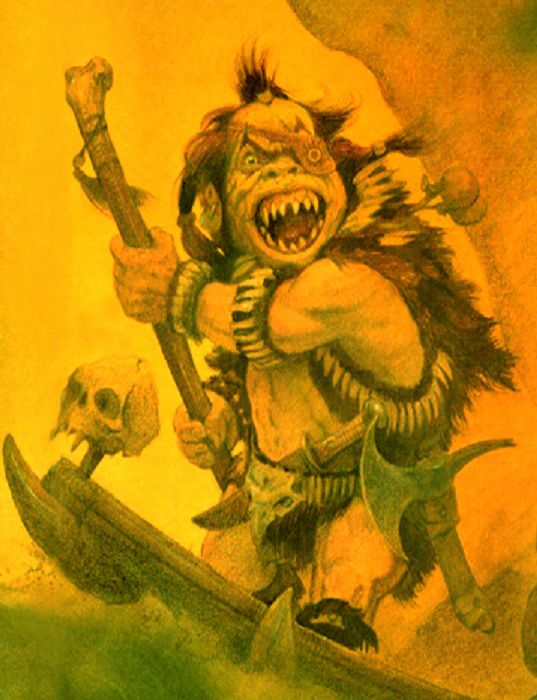
A depiction of a Teihiihan; author unknown.
Among the most dreaded figures in the lore of the Plains Indians were child-sized dwarves who were incredibly strong, very aggressive, bloodthirsty, and often attacked in large numbers.
“Teihiihan” comes from the Arapaho word meaning “strong.” The Arapaho also called them Hecesiiteihii, meaning “little people.”
These small, fearsome warriors were said to be so aggressive because they believed they had to be killed in battle to reach the afterlife.
These small creatures dwell in the vast area of the Great Plains, between the Mississippi River and the Rocky Mountains. They are known in the legends of the Cheyenne, Crow, Arapaho, Omaha, Osage, Kanza, Shoshone, Comanche, Ponca, and Gros Ventre.
Descriptions of these mini-monsters vary from tribe to tribe. Among some Siouan tribes, including the Osage, Omaha, and Kanza, it is said that they sometimes have wings, and the Omaha further say that they have only one eye. The Crow sees them with pot bellies and no necks.
Among the Omaha and Ponka, they were called Gada’zhe, meaning “Wild People,” who hunted with bows and poisoned arrows and were said to be able to inflict wounds beneath the skin without breaking the flesh.
Among most Plains Indians, these tiny warriors are described as about 2-4 feet tall, dark-skinned, with squat necks and sharp teeth, and able to run very far, outpacing their human counterparts. They are almost always hostile to human beings and are gluttonous, killing more people than they can eat.
The Wild People have magical powers and can be dangerous, sometimes kidnapping children or using witchcraft to harm people. Some legends say that they have the power to turn themselves invisible.
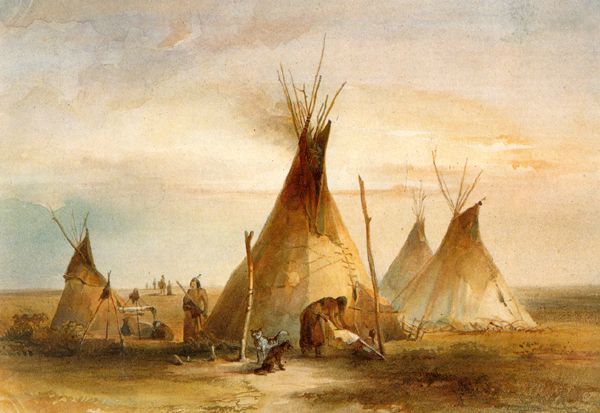
Plains Indians
According to most versions of the story, the race of cannibal dwarves was destroyed in an ancient war by the Arapaho and their allied tribes.
These dwarves are called by a multitude of names, including:
- Gada’zhe by the Omaha and Ponca
- Mi’-a-gthu-shka by the Osage
- Nimerigar by the Shoshone
- Nirumbee by the Crow
- Nunnupi by the Comanche
- Vo’estanehesano by the Cheyenne
©Kathy Alexander/Legends of America, updated April 2026.
Also See:
Legends, Ghosts, Myths & Mysteries
Native American Legends & Tales
Sources: