
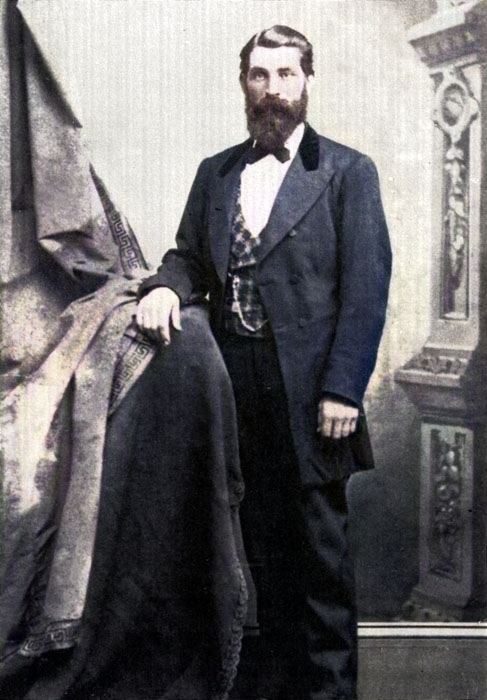
Hank Vaughan, Oregon Outlaw.
Henry Clay Vaughan, aka Hank Vaughan, was born in the Willamette Valley of Oregon Territory and grew up to become an infamous outlaw and gunfighter of the American West.
Born to Alexander and Elizabeth Vaughan on April 27, 1849, Henry Clay Vaughn entered life on the family farm in the Willamette River Valley South of Portland, Oregon. One of seven children, the family eked out a meager living, with the children spending more time helping on the farm than going to school. Though Henry attended school sporadically, he never learned to write. When Vaughan was 12, the family moved to The Dalles, Oregon, where they lived for five years before moving again to Canyon City, Oregon.
Canyon City was in the middle of a gold rush, and the Vaughans hoped to profit by starting a ranch to supply beef and horses to the many miners in the area.
As Vaughan grew to be a young man, he was a small, unimposing figure who never weighed more than 130 pounds. However, he had learned to aim his six-guns with deadly accuracy. He had also learned to drink with the same enthusiasm, which could often turn the average-looking man into a quick-tempered, gun-toting hell-raiser.
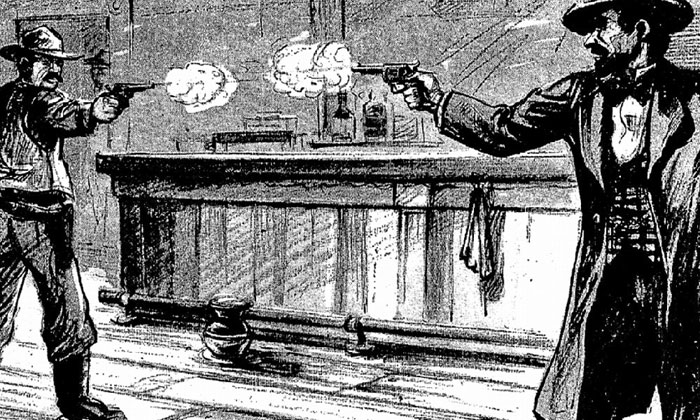
Gunfight.
Hank got into trouble for the first time at the age of 15. When William Headspot refused to pay for a horse, the pair got into an argument, and Vaughan shot Headspot. While out on bail, he shot another man who had filed the original complaint. Promptly rearrested, he was taken to the Dulles jail to await trial. His family soon intervened, pleading with the judge to allow young Hank to enlist in the Army rather than face his punishment. The judge agreed, and Vaughan was on his way to the Army. However, that didn’t last long with the imprudent young man, who was dishonorably discharged about 45 days later.
In the spring of 1865, Hank met a horse trader named Dan Burns, and they decided to head to the goldfields of Idaho. Along the way, the pair stole a large herd of Cayuse horses in Umatilla County, Oregon, and were quickly pursued by Sheriff Frank Maddock and his deputy O.J. Hart. The lawmen discovered that the rustlers camped near the Burnt River. Early the next morning, they approached the camp quietly and jerked the blankets off the sleeping men, telling them they were under arrest. Both outlaws jumped up, shooting. In the six-gun melee, Burns and Hart lay dead on the ground, and Maddock and Vaughan were wounded. Hank escaped on horseback, fearing a larger posse might be on its way. However, he was caught several days later and taken to the Baker County Jail to stand trial.
On June 16, 1865, the Dalles Weekly Mountaineer described Vaughan as “one of the worst villains that ever cursed the county…” and labeled him “the boy thief and murderer.”
In the end, Vaughan was sentenced to eight years in the Oregon State Penitentiary. There, he learned carpentry, bricklaying, blacksmithing, and how to read and write. When his family intervened once again, the Oregon governor pardoned him in February 1870.
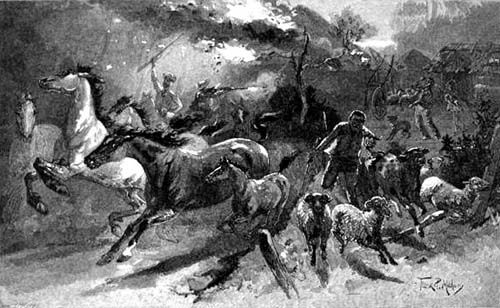
Horse Thieves.
Working with cattle and horses again, Hank set up shop at Toano, Nevada, and was successful enough to purchase acreage near Elko. Acting every part of the gentleman, he was well-liked around town, and in May 1875, he married Lois McCarty, sister of the notorious McCarty brothers. The couple had two sons, Alexander in February 1876 and Albert in September 1877. But Hank wasn’t home often, having a penchant for gambling and drinking. While on a drinking spree, he was often known to unnerve many a saloonkeeper by riding his horses into a saloon, shooting out lights, and blasting glasses off the bars. Lois soon left him, taking their sons with her.
By the spring of 1887, Vaughn was part of a gang led by Bruce Evans, which also included J.T. (“Tigh”) Canfield, C.O. (Homer) LaRue, Carl (or Hezekiah) Hughes, Hiram Maynard, and Robert McMillan, a 15-year-old boy.
In late May 1887, the horse gang members robbed, murdered, and mutilated between 10 and 34 Chinese employees of the Sam Yup Company for their gold. Called the Chinese Massacre, it occurred along the Snake River in Wallowa County, Oregon. Estimates of the value of gold stolen range from $4,000 to $50,000. The gold dust was given to J.T. Canfield for safekeeping, but he double-crossed the rest of the gang and fled the county.
Vaughan got into more trouble when he was involved in a gunfight in Arizona, where Hank took a shot to the head. Although it wasn’t fatal, he moved to Pendleton, Oregon, where he once again began selling horses and cattle to the area ranchers. He married again on August 31, 1878, to a woman from the Midwest named Louisa Jane Ditty.
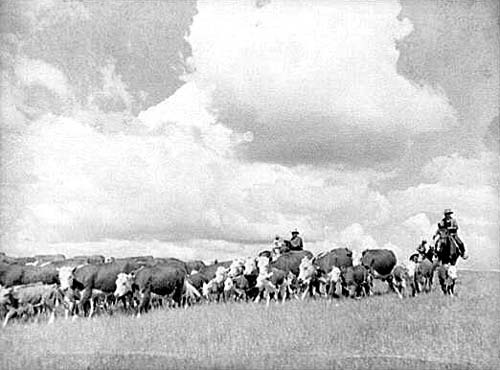
Cattle Drive.
Hank wasn’t always coming by the cattle and horses he traded legitimately. Making friends with several Indians on the Umatilla Reservation, they helped him round up strays from cattle drivers in the Blue Mountains. Several local ranchers began to suspect his activities, but couldn’t catch him.
His unsavory reputation began to spread, and he soon set up a new operation at Spokane Falls, Washington. The location was ideal as it was on the cattle route to Montana. Selling horses to the cattle herders, he began to round up any strays in their herds, and before long, his reputation was also known there. Returning to Oregon, he and Louisa lived in a remote mountain cabin in Sturgill Basin. But before long, Louisa left him, too.
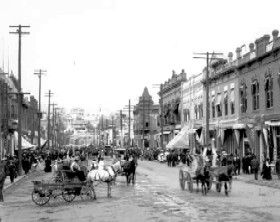
Pendleton, Oregon.
When he heard that a vigilante committee was forming to make things tough on cattle rustlers, he ventured into Prineville, Oregon, to get the scoop. Appearing at Graham’s Saloon in Prineville, he searched for a man named Charlie Long, a ranch boss who worked for Colonel Thompson, the leader of the vigilante committee. Playing poker with Long, the game got rough, and Graham broke it up. Long and Vaughan met again at Til Glaze’s saloon, but when Vaughan bought a round of drinks for the bar, Long refused to drink. Insulted, the affair escalated into gunplay. Long shot first at Vaughan, grazing his head, and Vaughan returned fire, hitting Long four times. However, before Long collapsed on the floor, he hit Vaughan one last time in the chest. Miraculously, both men survived.
Hank recovered and was tried at The Dalles, but was acquitted as Long had fired first. Soon, he moved to Wood River, Idaho. Selling horses to the many men working on a new railroad, he again became prosperous. Soon, he met the widow Martha Robie, who had inherited a large sum of money from her husband and owned land on the Umatilla Indian Reservation.
Though not legally divorced from Louisa, he married the widow Robie, who began to travel frequently by train. Soon, Vaughan earned a reputation for foiling train robbers, and the railroad awarded him a lifetime pass for his deeds.
Expanding his operations into Walla Walla and Spokane Falls, Washington, he had become successful enough to hire out his dirty work. But cattle rustling was becoming more difficult as rangelands began to be fenced and railroads sped posses along. Soon, he set up a farm on the Widow Robie’s property halfway between Walla Walla, Washington, and Pendleton, Oregon.
When his divorce from Louisa was finally legal in June 1883, he could publicly acknowledge his relationship with Martha Robie. Though the pair appeared to get along better than Hank had with his two former wives, he still spent much time gambling and drinking in saloons.
Although the farm was thriving, Vaughan wasn’t finished with his rustling. Operating primarily at night, he often used his ex-in-laws, the McCarty brothers, to act as lookouts. Eventually, the ranchers began to form new vigilante committees, which stopped Vaughan from most of his rustling activities.
In 1886, Vaughan humiliated a man named Bill Falwell by shooting at the man’s feet to make him “dance.” Not the least bit amused, Falwell shot Vaughan in the right arm the following day. Later that same year, Vaughan and his new wife sold the farm for a tidy profit and moved to Centerville, Washington, where he continued to shoot up the town.
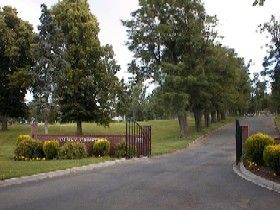
Olney Cemetery, Pendleton, Oregon.
On June 2, 1893, Vaughan went to Pendleton to get his horse shod and visited several saloons while he waited. Later, he galloped his horse up and down Main Street, whooping and hollering. Suddenly, the horse slipped and fell, crushing Hank beneath it. He suffered from a skull fracture and was taken to the Transfer House, where he lay semi-conscious for the next two weeks. He died of his injuries on June 15, 1893, at age 44, and was buried in an unmarked grave at the Olney Cemetery in Pendleton.
©Kathy Alexander/Legends of America, updated August 2026.
Also See:
Adventures of the American West
Sources: