
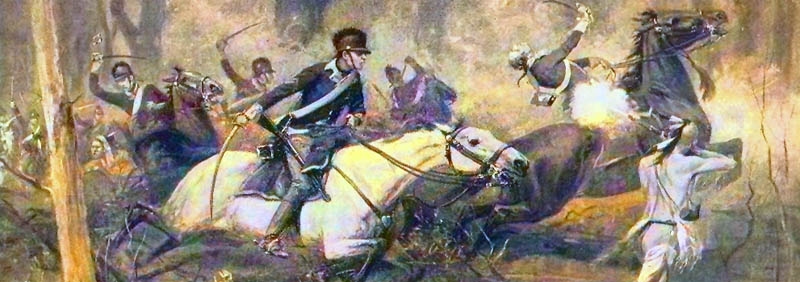
Ohio Indian War.
Many conflicts in Ohio were ongoing and began early in the first encounters between Europeans and Native Americans. These conflicts resulted from misunderstandings or from one side trying to take advantage of the other during trade.
Early traders between Indians and Europeans on the Ohio frontier were primarily the French because they were the first to explore the area and set up numerous trading posts throughout the Ohio country. The French had long explored North America and claimed it because their exploration dated back to the early 1500s.
For many years, the French represented the only traders with the Native Americans in Ohio. However, not everyone was happy with the situation, and an early rebellion against the French traders began in Ohio in 1747. At that time, Miami Chief Memeskia led an organized rebellion against the French, which led to the burning of a French trading post just south of present-day Toledo, Ohio. Years later, the British built Fort Miami there.
Another conflict between Europeans and Native Americans occurred in 1752, just before the French and Indian War. A French military expedition from Canada claimed the entire Ohio Valley, leading the French to claim ownership near present-day Piqua, Ohio.
Pickawillany Raid (1752)
The French & Indian War (1754-1763)
Pontiac’s Rebellion (1763)
Lord Dunmore’s War (1774)
Battle of Piqua (1780)
Old Northwest War (1785-1795)
Logan’s Raid (1786)
Josiah Harmar’s Expedition (1790)
Big Bottom Massacre (1791)
Siege of Dunlap’s Station (1791)
St. Clair’s Defeat (1791)
Fort St. Clair Attack (1792)
Battle of Fallen Timbers (1794)
Siege of Fort Recovery (1794)
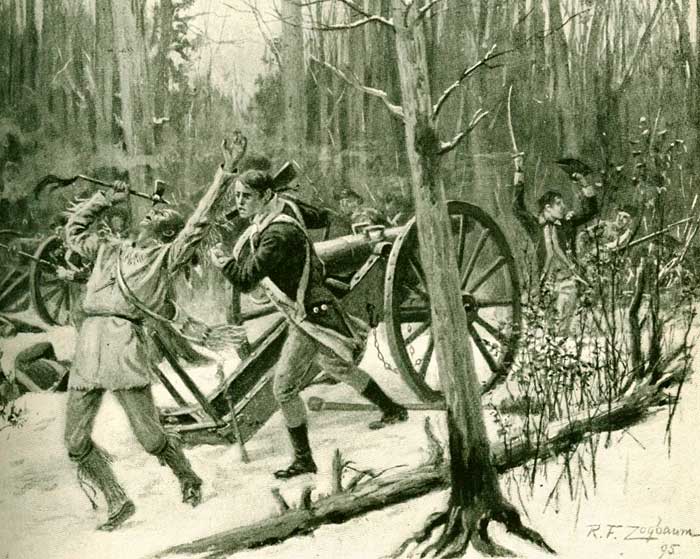
Northwest War by Harper’s Magazine.
Compiled by Kathy Alexander/Legends of America, updated September 2026.
Also See:
Frontier Skirmishes between the Pioneers & the Indians
Military Campaigns of the Indian Wars
Sources: