
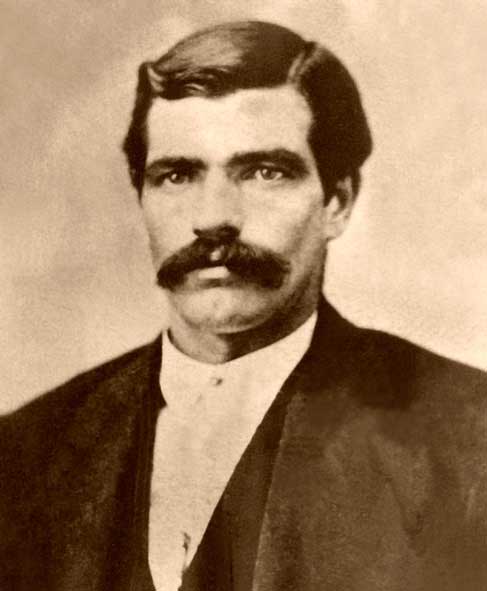
Thomas J. “Bear River” Smith was shot down in the line of duty while serving as Abilene’s marshal.
Thomas “Bear River” Smith served as a lawman in New York City, Bear River, Wyoming, and Kit Carson, Colorado, before becoming the marshal of the rough-and-tumble cowtown of Abilene, Kansas, in June 1870.
Born in New York City on June 12, 1840, Smith grew up to be a middleweight professional boxer before joining the New York City Police Force. However, after being involved in the accidental killing of a 14-year-old boy, Smith left the force in 1868 and took a job with the Union Pacific Railroad.
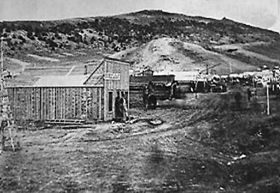
Bear River City, Wyoming
His new position soon took him westward, and he landed in Bear River City, Wyoming, where he worked as a teamster. In no time, he used his boxing skills to earn a reputation as a tough man, and he was soon appointed city marshal. However, trouble was brewing in the little city of Bear River after vigilantes hanged a murderer who worked for the railroad.
Soon, the man’s railroad friends revolted against the vigilantes. Inciting a vengeful mob numbering in the hundreds, the lawless bunch torched town buildings and started a deadly shoot-out with citizens trapped in a storeroom.
U.S. troops from Fort Bridger imposed martial law until the track layers had passed. Bear River City soon became another railroad ghost town.
Smith moved from Wyoming to Kit Carson, Colorado, where he held a similar position before going to Abilene, Kansas. In June 1870, he was appointed the Kansas Cowtown’s first marshal, badly in need of law enforcement. He was paid $150 a month plus $2.00 for each person arrested and convicted. One of Smith’s first official acts was to ban all weapons in town without a permit. Within 48 hours, everyone had turned their weapons on Smith, but he had to knock down two thugs before they surrendered their weapons.
Known as “No gun marshal,” he gained a reputation for subduing assailants with his fists rather than a gun, and where lawlessness reigned supreme, he was forced to use them often. The decision to ban guns was unpopular with some community members, and during the next few months, he survived two assassination attempts.
On November 2, 1870, Smith rode his horse some ten miles outside of Abilene to arrest a man named Andrew McConnell, who was charged with murdering John Shea, a local farmer. However, when he arrived at McConnell’s home, telling him that he had a warrant for his arrest, McConnell shot Smith in the chest. Smith returned fire, wounding McConnell before falling to the ground. McConnell’s co-conspirator in the original crime, a man named Moses Miles, then struck Smith with his gun, grabbed an ax, and nearly chopped Smith’s head from his body. Thomas “Bear River” Smith was buried in the Abilene Cemetery, where his body remains today.
The murdering pair of McConnell and Miles were soon captured, and in March 1871, both men were found guilty of murder and were sentenced to long terms in prison for their gruesome crime.
Afterward, the town of Abilene returned to its lawless ways until the next marshal could be hired – that of James Butler “Wild Bill” Hickok in April 1871.
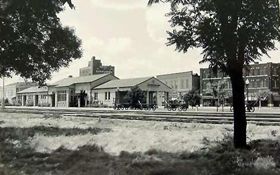
Vintage Abilene, Kansas.
Despite his reputation, however, Hickok did not do nearly as good a job in the role as Smith. Abilene eventually settled down when new railheads were built to Newton, Wichita, and Ellsworth, becoming the favored shipping points.
Years later, Marshal Smith would be remembered by another Abilene resident – none other than President Dwight D. Eisenhower, who said:
“According to the legends of my hometown, he was anything but dull. While he rarely carried a pistol, he subdued lawlessness with the force of his personality and his tremendous athletic ability. One blow of his fist was enough to knock out the ordinary ‘tough’ cowboy. He was murdered by treachery.”
©Kathy Weiser/Legends of America, updated March 2026.
Also See:
Abilene – Queen of the Kansas Cowtowns
Kansas Cowtowns – Lawlessness on the Prairie
Wild Bill Hickok & The Dead Man’s Hand
See Sources.