
By Sally Taylor.
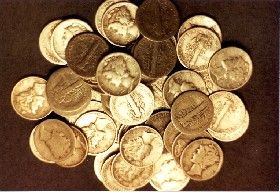
Mercury Dimes found at Optimist Park in Huntsville, Alabama.
If you are like me, you never get enough of the hunt, whether on the search for rocks and gems, fossils, or treasure. Now that the cold, wet weather puts a damper on outside searches for those in the north, it is prime time for indoor searches. After all, while you can, every once in a while, stumble upon a great place to hunt for treasure while just walking around in the wilderness, most productive treasure searches start inside.
The first task in treasure hunting is to figure out where exactly you want to hunt. It’s best to be realistic. You may dream of hunting in the South Sea Islands, but if you have no means to get there, you have much better ways to spend hours and hours of research. Productive searching close to home may help you fund some of your dream searches. So, to start, keep it close—somewhere you can spend some time searching. Once you pinpoint your target area, it’s time to hit the history books and old newspapers.
If you’re like me, you never tire of the hunt—whether it’s for rocks, gems, fossils, or treasure. As the cold and wet weather settles in for those of us in the North, it’s the perfect time to shift our searches indoors. While you might occasionally stumble upon a great outdoor treasure-hunting spot while wandering in nature, most successful treasure searches begin with careful preparation inside.
The information you seek pertains to old boomtowns, mining areas, battlefields, ghost towns (whether the structures still stand or not), towns leveled by natural disasters and never rebuilt, pilgrimage routes, migration paths, and anything else that can lead you to spots that were once inhabited or attacked and are now deserted. If you are near shorelines, you might also be interested in information about pirate localities, sea battles, landing areas, old settlements, and anything that might point you to buried artifacts along a coastline or even in the water if you are interested in underwater searches.
Once you pinpoint areas that look promising to search, it’s important to determine which areas are on public land and which are privately owned. The last thing anyone wants is to roam around private land without permission.
Not only can this cause trouble for you, but it can hinder all who want to search, as mass trespassing can lead to complaints that, in turn, lead to laws limiting searching for everyone. City halls or a local USGS branch can provide you with information about public and private lands and will likely appreciate your efforts to be respectful when searching. Chatting with people who have been employed for long periods in these places can sometimes get you some bonus leads, too, especially in less populated areas where people are more likely to know in-depth histories and legends from their areas.
When you find information of interest, you will want to dig up any old pictures you can find to get an idea of where it was located. Some landmarks may still exist even if the town itself doesn’t. County offices sometimes have town layout records that provide coordinates for old buildings and other helpful information. Now that you have all the information resources you can dig up on battle routes, massacre areas, stagecoach robberies, settler camps, towns leveled in natural disasters, and so on, it’s time to start using your imagination.
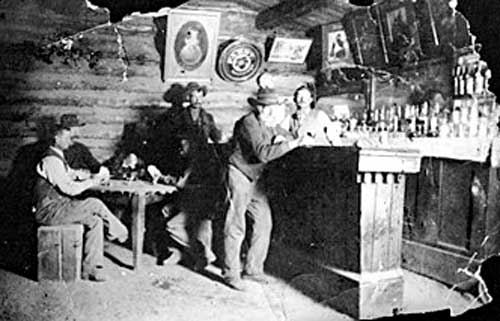
Jicarilla, New Mexico. Little Joe Saloon, 1902.
The exercise goes like this:
-
-
- Hmmm. They never located the relatives when the old guy who lived there died – I wonder what he may have hidden or lost around his place.
- Hmmm. A saloon was located right there – I wonder where the outhouse was. (A place where a lot of drunk men were taking their pants off might turn up some quantity of nice pocket artifacts – especially old coins.)
-
- Hmmm. Look at that rock behind that train wreck in this picture – I know where that rock is.
- Hmmm. The Northern armies passed right through here in the Civil War. I wonder how many people buried money and valuables to hide them. I wonder which of them never made it back to them.
- Now, you get to draw a few maps to take with you when the nice weather comes back around. These maps can be valuable all on their own.
- When your hunting season ends, you can add your stories about what you found in the areas you have mapped and searched. By compiling these maps and stories, you have created an archive that may be sold to other hunters or saved for future generations.
©2005 Sally Taylor, updated March 2026.
About the Author: Sally Taylor is an avid gem and treasure hunter, explorer, and writer, and owns Rockhound Station 1, a global rockhound community website that provides forums, articles, a newsletter, and more. Article Source: Ezine Articles (dead link)
Also See:
-