
Saloon and Dancehall Girls
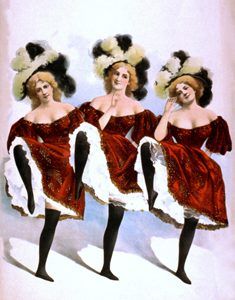
Dancing Girls, 1890.
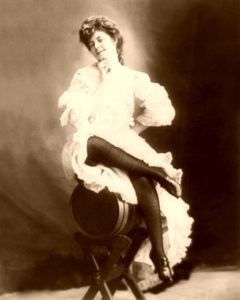
Lady on a Keg, 1904.
A saloon or dancehall girl’s job was to brighten the evenings of the many lonely men of the western town. In the Old West, men usually outnumbered women by at least three to one – sometimes more, as was the case in California in 1850, where 90% of the population was male. Starved for female companionship, the saloon girl would sing for the men, dance with them, and talk to them – inducing them to remain in the bar, buy drinks, and patronize the games.
Not all saloons employed saloon girls, such as Dodge City’s North side of Front Street, the “respectable” side. Both saloon girls and gambling were barred, and music and billiards were the chief amusements accompanying drinking.
Earning as much as $10 per week, most saloon girls also made a commission from the drinks they sold. Whiskey sold to customers was generally marked up 30-60% over its wholesale price. Commonly, drinks bought for the girls were only cold tea or colored sugar water served in a shot glass; however, customers were charged the full price of whiskey, which could range from ten to seventy-five cents a shot.
Saloon girls wore brightly colored ruffled skirts that were scandalously short for the time – mid-shin or knee-length. Under the bell-shaped skirts were colorfully hued petticoats that barely reached their kid boots, often adorned with tassels. More often than not, their arms and shoulders were bare, their bodices cut low over their bosoms, and their dresses decorated with sequins and fringes. Silk, lace, or net stockings were held up by garters, often gifts from an admirer. The term “painted ladies” was coined because the “girls” dared to wear make-up and dye their hair. Many were armed with pistols or jeweled daggers concealed in their boot tops or tucked between their breasts to keep the boisterous cowboys in line.
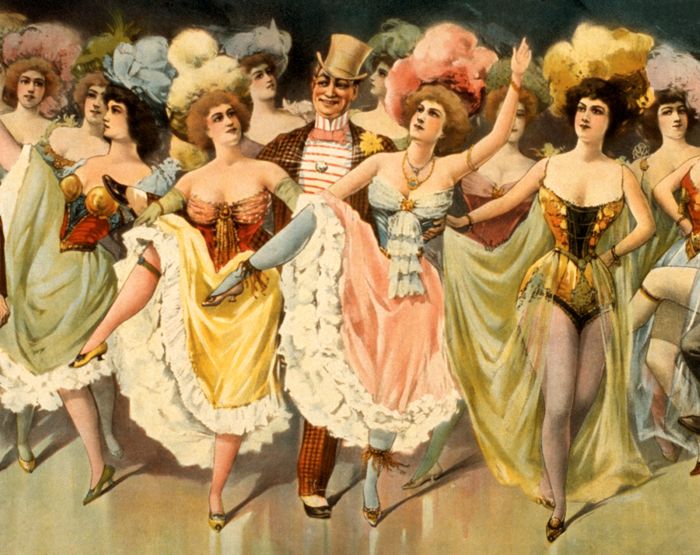
Vaudeville Dancing Girls.

