

Fancy Dancer, image courtesy of Wikipedia
The Native American Fancy Dance, also called the Fancy Feather or Fancy War Dance, is not a historical dance tradition of any tribe. Instead, it was created by members of the Ponca tribe in the 1920s and 1930s to preserve their culture and religion.
At that time, Native American religious dances were outlawed by the United States and Canadian governments. Traditional dances went “underground” to avoid government detection. However, this dance, loosely based on the traditional War Dance, was considered suitable for performance before visitors on reservations and at “Wild West” shows. Two young Ponca boys are credited with developing the fast-paced dance audiences loved. The Ponca Tribe soon built its dance arena in White Eagle, Oklahoma.
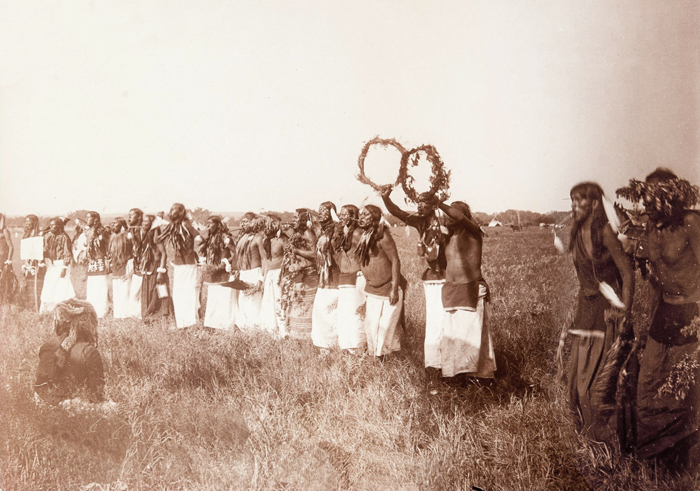
Ponca dancing.
Soon, other tribes adopted the practice and created new dances that could be legally performed in public. In the 1930s, the Kiowa and Comanche created new dance regalia styles that were incorporated into the Fancy Dance.
Before the Fancy Dance was established, an intertribal Pow-Wow circuit had already been organized where various tribes held dance contests. These became an important source of revenue during the Great Depression. In the late 1930s, women also began to perform in the Fancy Dance.
The dance is fast-paced, colorful, and highly energetic, often including tricks and extremely athletic movements. Dancers wear brightly colored feather bustles, headwear, beaded bodices, leggings, shawls, and moccasins. Clothes are also adorned with fringe, feathers, embroidery, ribbon work, and other elaborate designs. Beaded cuffs, chokers, earrings, bracelets, and eagle plumes are also worn. Fancy dancers are the most common sight in public exhibitions today, and the dance has also evolved into a competitive sport. Today, fancy dancers can be seen at many pow-wows across the nation and even around the world.
©Kathy Alexander/Legends of America, October 2026.
Also See:
Native American Photo Galleries
Native American Rituals and Ceremonies
See Sources.