
By Robert Benjamin
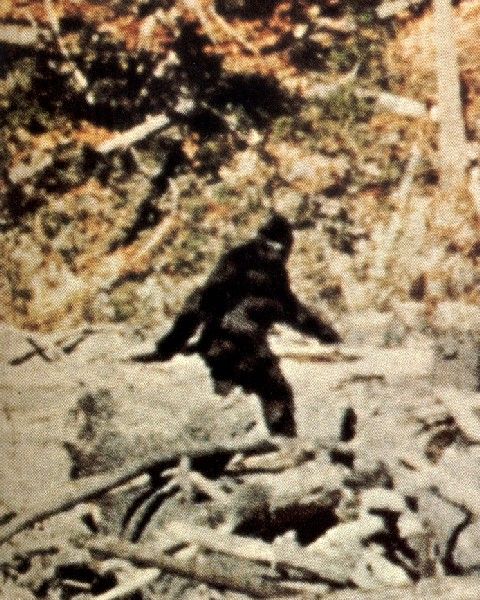
A frame from October 20, 1967, Patterson-Gimlin film shot in California, claiming to depict Bigfoot.
Bigfoot has been sighted throughout the United States from the 16th Century to the present. The first reported sightings were by Native Americans. It was called numerous names by different Indian tribes, and “Sasquatch” was only one of over 50 names given to the creature. Looking more like a hairy man than an ape or monkey, it is mostly reported as 6 – 8 feet tall but has been sighted with a more petite female and/or offspring. The larger adult male of the species is rugged and very muscular. Its shoulders are broad, and it has a narrow neck. It has short brown to black hair covering its body, with longer hair on the head. Most reports have the creature’s eyes glowing or shining red in the dark when reflected by a flashlight or some other light source.
Most folks report no odor when encountering Bigfoot, but among those who do, it appears to exhibit a strange anomaly: projecting or discharging a scent at will.
People sometimes report one smell, then suddenly, it changes into an entirely different odor. Odors have been described as rotten flesh, poop, old vomit, outhouses, rotted fish, rotten eggs, or foul and just sickening. Bigfoot seems to make Ape-like grunts and growls to almost a scream-like sound, and others have heard whistles and strange calls.
Almost all Indians believe Bigfoot is a non-physical creature. Some Indian tribes mention that they have seen the creature transform into a wolf. Others think these creatures live in another dimension from the physical plane, but can come here as they desire. Some also believe Bigfoot has excellent psychic abilities. Reports of sightings show the creature can be visible to some people while remaining invisible to others in the same group. There are many reports from non-Indians who saw the creature after a UFO sighting. And others that have searched for and researched Bigfoot for years are concluding that the creature is a spiritual being because it can appear or disappear at will.
Great Lakes Indians say that if one is walking in the woods and hears a stick being struck against a hollow log or tree, beware, for this is Sasquatch territory. This seems to be an interesting point to note, as other non-Indians have reported it as well. People have reported that sometimes the stick hitting sounds loud, like a large log being struck against a tree, while at other times it sounds more like a small stick being used.
Some Bigfoot researchers have reported sightings right after hearing these strange sounds. Besides stick-hitting, another well-documented fact reported by many Bigfoot researchers is rock throwing. Researchers have had stones thrown at them and their vehicles, and there have also been reports from people living in Bigfoot hot spots of stones being thrown onto their roofs and against their homes and cabins.
The creatures’ episodes of hitting sticks and rock-throwing may be the best evidence we have to show that they are spiritual beings. Suppose you research paranormal cases involving “poltergeist” incidents. In that case, you will soon realize that many cases involve throwing or dropping stones against houses and on the roofs of the homes where the poltergeist attacks occur. In many poltergeist cases, the stones dropped and thrown were the beginning of the infestation or encounter, just as in Bigfoot cases.
©Robert W. Benjamin, edited by Kathy Alexander/Legends of America, updated November 2022.
Article Source: EzineArticles
Also See:
Legends, Ghosts, Myths & Mysteries
Monsters & Strange Creatures of America
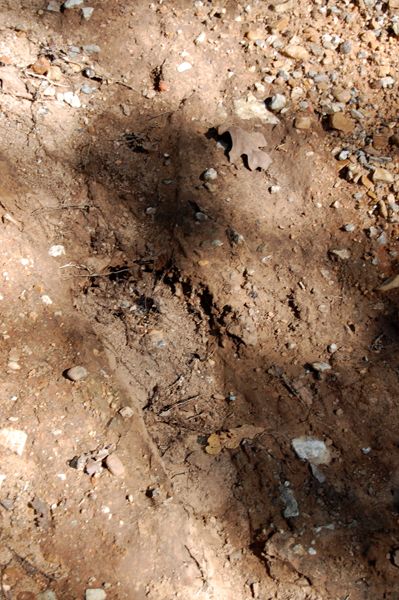
Bigfoot print at For Washita, Oklahoma.

Bigfoot print at For Washita, Oklahoma.
What do you think?: On a trip to Fort Washita, Oklahoma, we ran into some tracks that we wondered if they might just be from the big hairy creature himself. Check them out and tells us what you think. — Kathy Alexander