Legends of America

Follow the links to the various pages of Legends of America

The Old West Legends of America Outhouse Madness Ghostly Legends Outlaws Old West Saloons Rocky Mountain General Store Legends Photo Store The Book Store Make your travel reservations here! Route 66 Native Americans The Old States - Back East


Legends Of America's Facebook PageLegends Of America's Twitter Page

Legends Home

Site Map

What's New!!


Content Categories:

American History

Destinations-States

Ghost Towns

Ghostly Legends

Historic People

Native Americans

Old West

Route 66

Travel Center

Treasure Tales

   Search Our Sites

Custom Search

Google

About Us

Advertising

Article/Photo Use

Copyright Information

Blog

Forum

Guestbook

Links

Newsletter

Privacy Policy

Writing Credits


We welcome corrections

and feedback!

Contact Us


Legends Of America's

Rocky Mountain General Store


Old West Mercantile

Route 66 Emporium

TeePee Trading Post

Book Shelf

History Tech
Postcard Rack

Wall Art

and Much More!


  Legends Of America's Rocky Mountain General Store - Cart View


Legends' Photo Prints

Legends Of America's Photo Print Shop
 

Ghost Town Prints

Native American Prints

Old West Prints

Route 66 Prints

and Much More!!
 

Legends Of America's Photo Print Shop - Cart View


Native American LegendsNATIVE AMERICAN LEGENDS

Myths & Legends of the Sioux


Old West Wanted Posters


  Bookmark and Share

By Marie L. McLaughlin


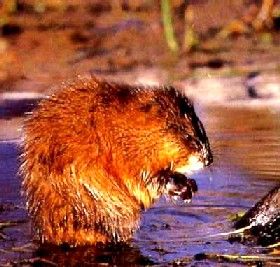
The Artichoke And The Muskrat

On the shore of a lake stood an artichoke with its green leaves waving in the sun. Very proud of itself it was, and well satisfied with the world. In the lake below lived a muskrat in his tepee, and in the evening as the sun set he would come out upon the shore and wander over the bank. One evening he came near the place where the artichoke stood.

"Ho, friend," he said, "you seem rather proud of yourself. Who are you?" "I am the artichoke," answered the other, "and I have many handsome cousins. But who are you?"

"I am the muskrat, and I, too, belong to a large family. I live in the water. I don't stand all day in one place like a stone."


"If I stand in one place all day," retorted the artichoke, "at least I don't swim around in stagnant water, and build my lodge in the mud."

"You are jealous of my fine fur," sneered the muskrat. "I may build my lodge in the mud, but I always have a clean coat. But you are half buried in the ground, and when men dig you up, you are never clean."

"And your fine coat always smells of musk," jeered the artichoke.

"That is true," said the muskrat. "But men think well of me, nevertheless. They trap me for the fine sinew in my tail; and handsome young women bite off my tail with their white teeth and make it into thread."

"That's nothing," laughed the artichoke. "Handsome young warriors, painted and splendid with feathers, dig me up, brush me off with their shapely hands and eat me without even taking the trouble to wash me off."

The Forgotten Ear Of Corn

Corn FieldAn Arikara woman was once gathering corn from the field to store away for winter use. She passed from stalk to stalk, tearing off the ears and dropping them into her folded robe. When all was gathered she started to go, when she heard a faint voice, like a child's, weeping and calling:

"Oh, do not leave me! Do not go away without me."

The woman was astonished. "What child can that be?" she asked herself. "What babe can be lost in the cornfield?"

She set down her robe in which she had tied up her corn, and went back to search; but she found nothing.


As she started away she heard the voice again:

"Oh, do not leave me. Do not go away without me."

She searched for a long time. At last in one corner of the field, hidden under the leaves of the stalks, she found one little ear of corn. This it was that had been crying, and this is why all Indian women have since garnered their corn crop very carefully, so that the succulent food product should not even to the last small nubbin be neglected or wasted, and thus displease the Great Mystery.


Compiled and edited by Kathy Weiser/Legends of America, updated July, 2010.

Return to Native American Legends

Return to Myths & Legends of the Sioux


Myths and Legends of the Sioux was written by Marie L. McLaughlin in 1913, and is now in the public domain. 

McLaughlin, who was of ¼ Sioux blood and was born and reared in the Indian community, acquiring a thorough knowledge of the Sioux people and language at an early age. While living on an Indian reservation for more than forty years, she learned the legends and folklore of the Sioux. These legends and myths were told in the lodges and at the campfires of the past, and then later by the firesides of the Dakota. McLaughlin kept careful notes of the many tales told to her by the Sioux elders until she published this book of legends in 1913.



Free eNewsletter


Our eNewsletter features articles on the Old West, travel destinations, ghostly legends, and subscriber only specials from our Rocky Mountain General Store. Sent directly to your inbox, grab a cup of coffee and travel the historic paths of the American West. Sign up today!


From the Rocky Mountain General Store

Native American Vintage Photographs Native American Photo Prints  - Vintage photographs of famous chiefs, heroes, and Indian life in the 19th century.


There is no Sunday west of St. Louis – and no God west of Fort Smith.

--  Old adage used to describe the Western frontier


                                                              Copyright © 2003-2012, www.Legends of America.com