
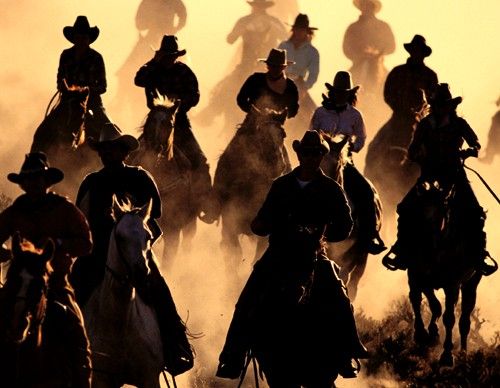
Cowboys.
Do not go where the path may lead;
go instead where there is no path
and leave a trail.
— Ralph Waldo Emerson
A
Abbot Downing Company (1827-1847, 1865-1919): This organization, which made the world-renowned Concord Stage, built thousands of stagecoaches during its many decades in business.
Hugh Anderson (18??-1873) – The son of a wealthy Bell County, Texas cattleman, Anderson followed in his father’s footsteps, becoming a cowboy and driving the herds up the Texas Trails to Kansas. He was involved in the Hyde Park Gunfight in Newton, Kansas, and was later killed in a revenge duel.
B
Billy Bailey (18??-1871) – A lawman and cowboy, Bailey was thought to have been from Texas before winding up in Newton, Kansas, where he was shot down in a gunfight.
William Becknell (1788-1856) – A frontiersman and trader who established the Santa Fe Trail.

John M. Bozeman
John M. Bozeman (1835–1867) scouted and blazed the Bozeman Trail from Wyoming to Virginia City, Montana.
John Braden (18??-1896) – Working for various stagecoach outfits for several decades before settling down in Albuquerque, New Mexico, Braden died a hero when he saved several people from a burning wagon.
John Butterfield (1801-1869) – Getting his start as a stagecoach driver at 19, Butterfield parlayed his shrewd business sense to own and operate American Express and the Overland Mail Company.
C
Nate Champion (1857-1892) – A top Texas cowboy, Champion moved to Wyoming, where he became involved in the Johnson County War and was killed.
Jesse Chisholm (1805?- 1868) – Though Jesse Chisholm blazed the famous Chisholm Trail, he never herded cattle. Instead, he used the path to transport goods to and from his trading posts.
John Simpson Chisum (1824-1884) – John Chisum was a cattle baron who moved longhorn herds from Texas into New Mexico in the mid-1800s, where he founded one of the largest cattle ranches in the American West.
Clanton Gang, aka The Cowboys – The Clanton family and their ranch hands were a loosely organized gang of outlaws who operated along the Mexican border, stealing cattle, robbing stagecoaches, ambushing teamsters, and committing murder.
William “Buffalo Bill” Frederick Cody (1846-1917) – Buffalo Bill was a freighter, cattle driver, Pony Express rider, Civil War soldier, buffalo hunter, and army scout before he began entertaining many people in his Buffalo Bill’s Wild West Show.
F
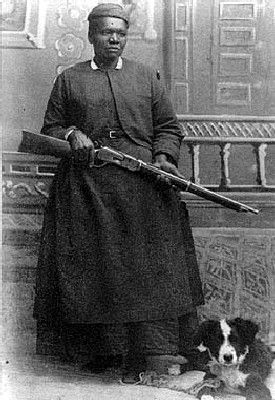
Mary Fields
Mary Fields, aka Stagecoach Mary (1832-1914) – Born as a slave in Tennessee, Fields was one of the first women entrepreneurs, stagecoach drivers, and pioneers of the American West.
Clark “Old Chieftain” Foss, aka Old Foss (1819-??) – A boisterous and colorful driver, Foss ran a stage through Napa Valley, California, during the 1860s and took many sightseers to the famed geysers in the Calistoga and Geyserville area.
Johnny Fry (1840-1863) – The first “official” westbound rider of the Pony Express and a Union soldier killed during the Civil War.
G
Charles J. Goodnight (1836-1929) – Goodnight was a cowboy and Texas Ranger who blazed the Goodnight-Loving Trail, invented the chuckwagon, and became part owner in one of the largest ranches in the Texas panhandle.
George “Baldy” Green – One of the most famous stage drivers in the Sierra Nevadas, his stages were so prone to robbery that he was finally let go.
H
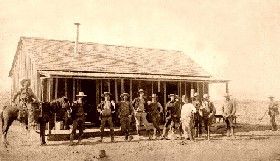
Aztec Cowboys, 1877
The Hash-Knife Outfit (1884-1900): In the late 1800s, the Aztec Land and Cattle Company of Boston became the third-largest cattle company in North America in Holbrook, Arizona.
Robert “Pony Bob” Haslam (1840-1912) – A Pony Express rider who set the record for the longest ride, Pony Bob also served as a U.S. Deputy Marshal, an army scout, and a stage driver for Wells Fargo.
Charles C. Haynes (1837-??) – One of the most prominent drivers on the Overland Stage Line, Haynes drove for 20 years.
Ben Holladay (1819-1887) – Holladay began several stagecoach routes and became known as the “Stagecoach King.”
I
Bose Ikard (1847-1929) – A former slave, Ikard honed his cowboy skills and rode with Charles Goodnight.
L
Gordon William “Pawnee Bill” Lillie – (1860-1942) – A performer in Buffalo Bill Cody’s Wild West Show, Pawnee Bill later formed his own act, becoming so popular he was stiff competition for Buffalo Bill.
Nat Love, aka Deadwood Dick (1854-1921) – Nat Love, also known as “Deadwood” Dick, was said to have been the greatest black cowboy in all of the Old West.
Oliver Loving (1812-1867) – A cattle rancher and pioneer of the cattle drive who, along with Charles J. Goodnight, developed the Goodnight-Loving Trail. He was killed by Indians while on a cattle drive.
M
Joseph G. McCoy – (1837-1915) – Founder of the cattle trade in Kansas, originator of the Abilene Trail, and cattle baron.
George McJunkin – (1851 – 1922) – A talented bronc buster, ranch hand, and member of the Cowboy Hall of Fame, Black cowboy George McJunkin is credited with one of the most significant archeological finds in the U.S.
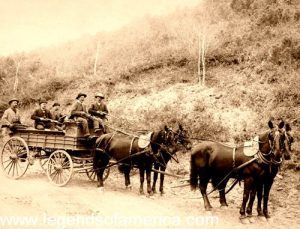
Wells Fargo Express.
James Wales Miller – A stagecoach driver for Wells Fargo, Miller established the first stage line between Auburn and Sacramento, California. Nattily dressed with silver stars on his hat and a silver-banded whip, he would add to his “silver collection” after he outran several would-be road agents in the 1860s. Wells Fargo was so grateful that he saved a $30,000 payroll shipment that they asked him what he would like as a reward. Miller responded, “A dame big bullion watch.” Wells-Fargo gave him a silver watch and chain that weighed approximately two and a half pounds. The watch was about three inches in circumference and one inch wide.
Henry James “Hank” Monk (1833-1883) – One of the most famous stagecoach drivers in the American West, Henry Monk, was made famous in 1859 after giving a wild and furious ride to Horace Greeley.
George “Alfred” Monroe (1844-1886) – Born a slave, Monroe later became one of the most skilled “whips” in the American West. A mulatto, gained renown for driving stages for United States presidents.
James “Jim” Moore (1849-1873) – One of the first Pony Express riders hired at St. Joseph, Missouri division, Moore is known for making his greatest ride on June 8, 1860.
O
Annie Oakley, aka Phoebe Anne Oakley Mosey (1860-1926) An excellent markswoman, Oakley made her living, demonstrating her amazing ability to hit her target. As a star of Buffalo Bill’sWild West Show, she traveled the world.

Wild Bill Hickok, Texas Jack, and Buffalo Bill Cody.
John Baker “Texas Jack” Omohundro (1846-1880) – Texas Jack was a frontier scout and cowboy who joined Buffalo Bill Cody to perform in his Wild West Show.
P
Charley Parkhurst, aka One-Eyed Charley, Mountain Charley, Six-Horse Charley (1812-1879) – Parkhurst was a female tobacco-chewing, cussing, gambling California stage driver.
Charles “Charlie” E. Parks (18??-1907) – In the early 1860s, Parks was one of 80 Pony Express riders who served Utah, Nevada, and California, where he was regarded as one of the most capable and faithful men of the western division. After the Pony Express ended, he worked as a “shotgun messenger for Wells Fargo.” In this capacity, it was his duty to guard the iron boxes’ treasures in the boot of the stagecoach. In his seat beside the driver, he carried his “sawed-off” weapon ready for use as encounters with road agents were plentiful in the early days of placer mining in California. Parks won undying fame as a defender of the trust over which he watched, carrying more than a score of bullet wounds to his grave. After Wells Fargo, he made his home in the insurance and brokerage business in San Francisco. He was about 70 when he died in San Francisco on March 27, 1907.
Pawnee Bill – See Gordon William “Pawnee Bill” Lillie
William Pickett, aka Bill, Will (1870?-1932) – Of black and Indian descent, Bill Pickett was one of the first great rodeo cowboys and is credited with inventing the sport of bulldogging.
R
Charles Rath (1836-1902) – Merchant, buffalo hunter, and freighter, Rath was one of the original organizers of Ford County, Kansas.

Delia Haskett Rawson.
Delia Haskett Rawson (1861-1949) – Becoming a driver at 14, Delia was the first female stage driver and maybe the youngest to carry the U.S. mail in California.
Russell, Majors, and Waddell (1854-1862)—This partnership of William Hepburn Russell, Alexander Majors, and William B. Waddell was a freighting and staging firm based in Lexington, Missouri. Founded in 1854 to supply military posts in the American West, the company played a significant role in the Great Plains’ transportation history. It would later operate various transportation and communications services, including stagecoach services, private express mail service, and the brief operation of the Pony Express.
T
William Trotter (1836-??) – Growing up to become a well-known Overland Stagecoach driver, Trotter was born in Pennsylvania. At 16, he left home and traveled westward to Kansas Territory. Two years later, he worked in Iowa for the Western Stage Company. He later went to work for Central Overland California and Pike’s Peak Express Company before being employed by the Overland Stage Line. With his experience, he was promoted to a Division Agent from Fort Kearney, Nebraska, to Julesburg, Colorado. As the railroad pushed westward, so did the stage line, and Trotter eventually wound up on the Pacific Coast by the early 1870s. After two decades of staging, he then became a hotel keeper.
U
Charlie Utter (1838-??) – Charlie Utter was a trapper, prospector, transport businessman, and a close friend of Wild Bill Hickok.
© Kathy Alexander/Legends of America, updated January 2025.
Strap on your chaps, boys, and tie on your slicker;
Before the day’s over, you’ll wish you had some licker.

Also See:
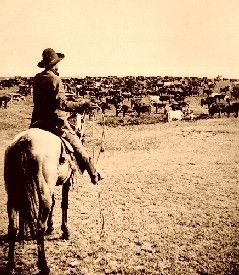
Cattle Roundup
Cowboys on the American Frontier
The Range of the American West
Stagecoaches of the American West
Tales & Trails of the American West