
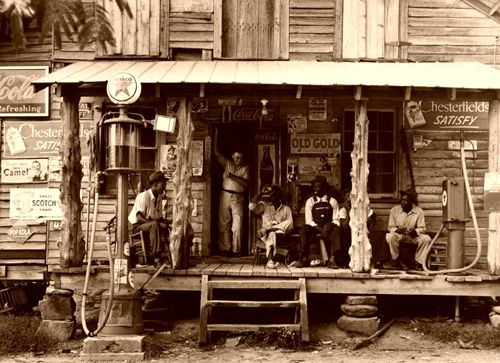
A country store in the east, 1939.
By Frank Pandozzi
Every state has ghost towns. Eastern and Midwestern States are no exception. At one time or another, you may have driven your car right by a ghost town, not aware of it. If you are a hiker, backpacker, or hunter, you may have walked past or through a ghost town, not knowing one was there.
When people hear the words “ghost town,” they associate the term with the old, abandoned Western frontier towns. Many of those settlements are still standing, but in the Eastern states, most old towns from the 1800s to the early 1900s are no longer visible. And they are no longer visible, making them virtually unknown.
Another reason people are unaware that ghost towns exist in the East is that historians and writers have overlooked them.
Historians never took the time to research the ghost towns of Middle America and the Eastern states. Instead, there has always been a fascination with the ghost towns of the Western states. Most books or stories about the “gold rush” will probably mention a Western town that once thrived but is now a ghost town. Those stories have kept interest in Western ghost towns alive.
The excitement surrounding the ghost towns in the Midwest and the East is even more compelling because they are harder to locate. And the difficulty of locating these ghost towns makes them more of a mystery.
My travels as a treasure hunter have taken me to many Eastern ghost towns. I have hiked through miles of brush, crossed hundreds of streams and rivers, and climbed steep ravines in search of the old towns of the East.
Anyone interested in American History should take the time to research and explore the settlements that once populated our rural areas. It’s a great adventure and an exciting way to spend time outdoors.
Cellar Holes – In the Eastern and Midwestern States, most ghost towns are nothing more than a hole in the ground. The holes are cellar holes. They are what’s left of the houses that once sat atop them.
Searching for cellar holes or ghost towns is an exciting adventure that can lead to some interesting experiences and treasures. Often, the areas surrounding ghost towns are pieces of history lying on the ground, untouched for hundreds of years. Old bottles and pottery shards often lie scattered. I also use a metal detector to search for relics that were lost or buried by past inhabitants.
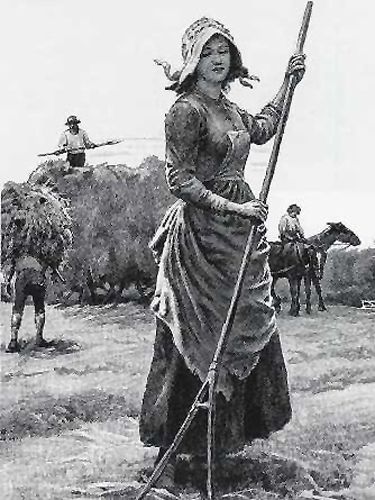
Pioneer Woman
The First Pioneers – The first pioneers were a hardy bunch. They had to deal with harsh winter months and hot, humid summers. In addition, wild animals and infectious diseases were a constant problem. Of course, there was no running water or electricity either. Everything was done by hand, including digging the cellars for the homes.
Nor was raising a family easy. Many young babies and children died of disease. This is confirmed by the fact that as I locate old cellar holes, I often stumble upon an old tombstone erected on the property by the family, and often, the grave is the burial site of a young child. I have a lot of respect for those pioneers.
How to Find Eastern Ghost Towns – Ghost towns existed as small towns or villages. They were probably the first settlement in an area. Today, there are holes in the ground, covered and hidden by hundreds of years of vegetation. Time, weather, and man have all played their parts in the ruins of the old towns of the Eastern and Midwestern States. Start by browsing used bookstores. Look for old books in the local history sections. Often, you can gather information about an old town by reading through an old book about the area.
Historical Societies – Visit your local historical societies. A significant amount of information on the history of your area can be found there. I have found ghost towns by searching old newspapers on file at the historical societies.
Libraries – The history sections at your local libraries are another great place to search for information on old settlements.
The Internet is an excellent tool for research now. Researching ghost towns on the Internet is no different. For a recent television series I produced, the Internet and my computer provided valuable information for my search for a ghost town.
©Frank W. Pandozzi, January 2007, updated March 2026.
About the Author: Frank W. Pandozzi is an author, TV Producer, and well-known treasure hunter. He began his “treasure hunting” days 25 years ago, metal detecting parks and schoolyards. Today, Frank Pandozzi is the producer and host of the Exploring History’s Treasures TV series. Article Source: Ezine Articles (dead link.)

A roadside Inn in Ohio.
Also See:
Ghost Towns & Mining Camps Across America
Ancient Cities of Native Americans
Cemeteries – Outdoor Museums of the Forgotten Past